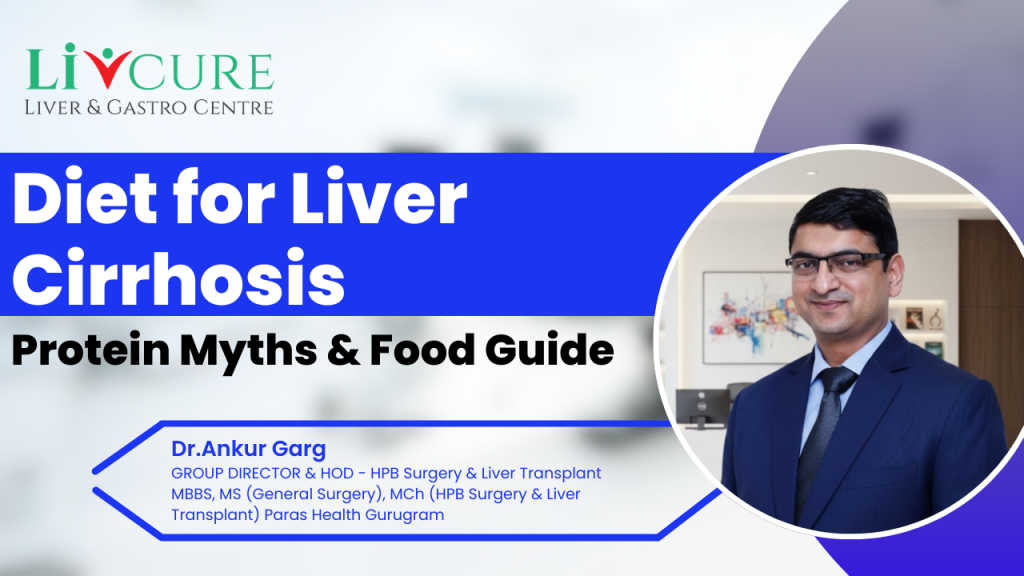
Food Is Medicine, Especially for a Damaged Liver
When families meet me for cirrhosis care, one of the first questions they ask is:
“Doctor, what should we eat now?”
or
“Should we stop proteins? Someone told us that dal and eggs will worsen the liver.”
The truth is:
Nutrition is not a side topic in cirrhosis.
It is a treatment.
A good diet can slow disease progression, prevent complications, improve strength, boost immunity, and even delay transplant in many patients.
A poor diet can worsen fluid retention, increase confusion, cause muscle loss, and make patients too weak for a future transplant.
In this detailed guide, I will explain:
- What foods are essential
- What foods must be restricted?
- How much protein do cirrhosis patients actually need
- The biggest myths families believe
- How to manage diet during complications
- What to eat before and after a liver transplant
Let’s break it down in a way that is medically accurate, easy to follow, and practical for everyday life.
1. The Liver’s Role in Nutrition, and Why Cirrhosis Changes Everything
The liver performs hundreds of metabolic functions, but the three most important for nutrition are:
- Processing and storing nutrients
- Producing proteins (albumin, clotting factors)
- Regulating glucose and fat metabolism
In cirrhosis:
- The liver becomes hard and scarred
- Energy storage becomes inefficient
- Muscle tissue becomes the backup energy source
- Patients lose weight rapidly
- Protein breakdown accelerates
- Toxins accumulate
- Fluid retention increases
This is why cirrhosis patients often develop:
- Weakness
- Poor stamina
- Muscle wasting (sarcopenia)
- Early satiety
- Low appetite
- Ascites
- Encephalopathy
Diet is one of the key tools to counter these problems.
2. The Biggest Myth: “Protein Is Dangerous for Cirrhosis.”
For decades, people believed that eating protein increased ammonia levels and worsened hepatic encephalopathy (confusion).
This led families — and sometimes even doctors — to restrict protein.
Today, this is known to be incorrect and harmful.
Here’s the scientific truth:
- Cirrhosis patients need high protein, not low
- Protein restriction causes muscle loss
- Loss of muscle increases ammonia levels
- This worsens encephalopathy, not protein itself
In other words:
Low protein → more muscle breakdown → more ammonia → more confusion
Recommended daily protein intake
Cirrhosis patients need:
- 1.2–1.5 g protein per kg body weight per day
- Example: A 60 kg patient needs 72–90 g protein daily
This includes:
- Eggs
- Dal
- Curd
- Paneer
- Chicken/fish (if non-vegetarian)
- Soybean
- Tofu
- Whey protein (in select cases)
Protein is essential for:
- Maintaining muscle
- Preventing weakness
- Improving metabolism
- Healing tissues
- Preventing infections
- Preparing for transplant
Restricting protein is never recommended, except in very rare, severe encephalopathy episodes — and even then, it is temporary.
3. What to Eat: The Complete Cirrhosis-Friendly Diet
This section explains exactly what foods help support the liver and prevent complications.
3.1 High-Quality Proteins
These help repair muscle, maintain immunity, and stabilise metabolism.
Vegetarian options
- Dal (all types)
- Kidney beans (rajma)
- Chickpeas (chana)
- Beans
- Paneer
- Curd
- Buttermilk
- Milk
- Soybean
- Tofu
- Nuts and seeds
- Whey protein (doctor-guided)
Non-vegetarian options
- Eggs
- Fish (preferred: easier to digest)
- Chicken breast
- Lean meats
Avoid red meat if encephalopathy is frequent, but otherwise, it can be included in moderation.
3.2 Complex Carbohydrates
These provide stable energy without spiking blood sugar.
- Whole wheat roti
- Oats
- Brown rice (limited if ascites)
- Dalia (broken wheat)
- Quinoa
- Jowar/bajra
- Sweet potatoes
Carbohydrates are essential because cirrhosis patients break down muscle quickly when not eating enough calories.
3.3 Fruits and Vegetables
These provide antioxidants, vitamins, minerals, and fibre.
Preferred fruits
- Papaya
- Banana
- Apple
- Pear
- Pomegranate
- Melon
- Mango (moderation)
- Chikoo
Preferred vegetables
- Carrot
- Beans
- Cauliflower
- Cabbage
- Pumpkin
- Bottle gourd (lauki)
- Ridge gourd (tori)
- Spinach (moderation — may increase bloating)
- Beetroot
Avoid raw vegetables if you have ascites or are immunosuppressed, to reduce infection risk.
3.4 Healthy Fats
Healthy fats help with energy balance and reduce inflammation.
- Olive oil
- Mustard oil
- Groundnut oil
- Avocado
- Nuts and seeds
Deep-fried foods should still be minimised because they cause bloating and indigestion.
3.5 Fluids
Correct hydration prevents kidney stress.
- Water
- Lemon water
- Coconut water (if potassium is normal)
- Herbal teas
If sodium is low, fluid restriction may be required under doctor’s supervision.
4. What to Avoid: Foods That Increase Liver Stress
Certain foods directly worsen ascites, confusion, or inflammation.
4.1 Salt (Sodium) — The Most Important Restriction
Too much salt causes:
- More fluid retention
- More ascites
- More leg swelling
- Higher blood pressure
- Increased strain on kidneys
Limit salt intake to: 2 g/day
This includes:
- Pickles
- Papad
- Chips
- Canned foods
- Bread
- Bakery items
- Processed foods
- Maggi, sauces, ketchup
- Restaurant meals
Salt control is the single most effective dietary tool for controlling ascites.
4.2 Alcohol — Absolutely Not Allowed
Alcohol—even in small amounts—can:
- Accelerates liver damage
- Increase portal hypertension
- Trigger encephalopathy
- Cause sudden decompensation
For all cirrhosis patients, alcohol must be strictly avoided for life.
4.3 Red Meat (in select cases)
Red meat contains high levels of aromatic amino acids, which may worsen ammonia metabolism.
If a patient has:
- Frequent encephalopathy
- Severe portal hypertension
It is better to avoid red meat.
Chicken, fish, eggs, and plant proteins are safer.
4.4 Fried, Oily, and Spicy Foods
These increase:
- Bloating
- Acidity
- Diarrhea
- Indigestion
They also worsen ascites indirectly.
4.5 Raw Seafood
Risk of bacterial infections, which can be deadly in cirrhosis.
4.6 Herbal Supplements and “Liver Tonic” Syrups
These can cause sudden liver failure.
Avoid all unverified, non-medical supplements.
4.7 Sugary Foods
Excess sugar leads to:
- Fatty liver
- Poor glycemic control
- Increased inflammation
Replace sweets with fruits when possible.
5. Meal Timing: Why Cirrhosis Patients Should Not Stay Hungry
Cirrhosis patients enter a fasting state much faster than normal individuals.
This means the body begins to break down muscle even after 3–4 hours without food.
To prevent muscle loss:
Recommended meal pattern
- 3 main meals
- 2–3 snacks
- A late-night carbohydrate + protein snack
The late-night snack is essential.
It prevents overnight muscle breakdown.
Examples:
- Banana + peanut butter
- Milk + whey protein
- Dal + rice
- Egg + toast
- Greek yogurt
This improves metabolism and maintains muscle mass.
6. Diet Plan for Different Cirrhosis Situations
Different stages of cirrhosis require different nutritional strategies.
6.1 Diet for Compensated Cirrhosis
- High protein
- Moderate carbs
- Low salt
- Normal fluids
- Avoid alcohol completely
Focus on building muscle early.
6.2 Diet for Decompensated Cirrhosis
When complications begin (ascites, jaundice, varices):
- Low salt
- High protein
- Small frequent meals
- Avoid red meat if encephalopathy
- Restrict fluids if sodium is low
- Avoid raw salad
- Avoid pickles, papad, and packaged foods
6.3 Diet During Ascites
Essential rules:
- Strict salt restriction
- Avoid all pickles, papad, chips, and outside food
- Prefer home-cooked meals
- Restrict fluid if sodium <125
Encourage:
- Rice
- Oats
- Dalia
- Lauki
- Tori
- Soups
- Buttermilk
- Lentils
Avoid gas-forming vegetables.
6.4 Diet for Hepatic Encephalopathy
Contrary to old beliefs:
Do not stop protein.
Instead:
- Replace red meat with plant protein
- Add branched-chain amino acids (BCAAs) through:
- Dal
- Soy
- Whey
- Buttermilk
- Give lactulose as prescribed
- Use probiotics if suggested
Focus on gut-friendly foods.
6.5 Diet During Acute Hospitalisation
Patients often need:
- NG tube feeding
- High-calorie liquid diets
- Protein supplements
- Electrolyte management
- Low-sodium feeding
The goal is to maintain nutrition even when appetite is poor.
6.6 Pre-Transplant Diet
Before transplant, patients should be:
- High protein
- High calorie
- Low salt
- Corrected for vitamin D deficiency
- Receiving zinc & B-complex supplements
Malnutrition increases transplant risk, so optimising nutrition is essential.
6.7 Post-Transplant Diet
After a successful transplant:
- High protein for 3 months
- Adequate calories
- Avoid raw meat and seafood
- Avoid grapefruit juice
- Limit salt
- Avoid alcohol permanently
- Eat clean, fresh, home-cooked meals
Immunity is low in the first few months, so an infection-free diet is critical.
7. Supplements Cirrhosis Patients Often Need (Doctor-Guided Only)
- Vitamin D
- Zinc
- B-complex
- Omega-3
- Probiotics
- Protein powders
- BCAA supplements
Patients should not self-prescribe supplements.
8. Common Mistakes Families Make
8.1 Stopping protein during confusion
This is dangerous and outdated advice.
8.2 Giving herbal or ayurvedic liver tonics
Many have caused sudden liver failure.
8.3 Over-restricting diet
Patients end up severely malnourished.
8.4 Using packaged “low-fat” foods
These are usually high in salt.
8.5 Giving too much fruit juice
This spikes sugar and worsens fatty liver.
8.6 Delaying medical care
Diet alone cannot reverse advanced cirrhosis.
9. Sample 1-Day Diet Chart for Cirrhosis
Morning
- Warm water
- Oats with milk + nuts
- 1 fruit
Mid-Morning
- Buttermilk
- Boiled egg
Lunch
- Rice or chapati
- Dal
- Vegetables
- Curd
- Grilled chicken/fish or paneer
Evening Snack
- Peanut chikki
- Fruit + nuts
- Boiled chana
Dinner
- Dal + rice
- Vegetables
- Paneer/chicken
Bedtime Snack (essential)
- Milk + whey protein
- Dal + rice
- Banana + peanut butter
10. Summary: Eat Smart, Eat Enough, and Avoid Myths
Nutrition is a core part of cirrhosis treatment.
A well-designed diet:
- Controls ascites
- Prevents encephalopathy
- Reduces weakness
- Maintains muscle
- Improves survival
- Prepares the body for transplant if needed
And the most important principle:
Protein restriction is a myth. Protein is essential.
When combined with medical treatment, the right diet gives patients strength, stability, and a significantly better quality of life.
Final Message for Patients and Families
Do not rely on Google advice or home remedies.
Cirrhosis is a complex condition, but diet, when done correctly, is one of the most powerful tools you have.
If you or your loved one has cirrhosis, consult your liver specialist and a trained dietician to create a personalised diet plan.
Good nutrition can make the difference between slow decline and long-term stability.